


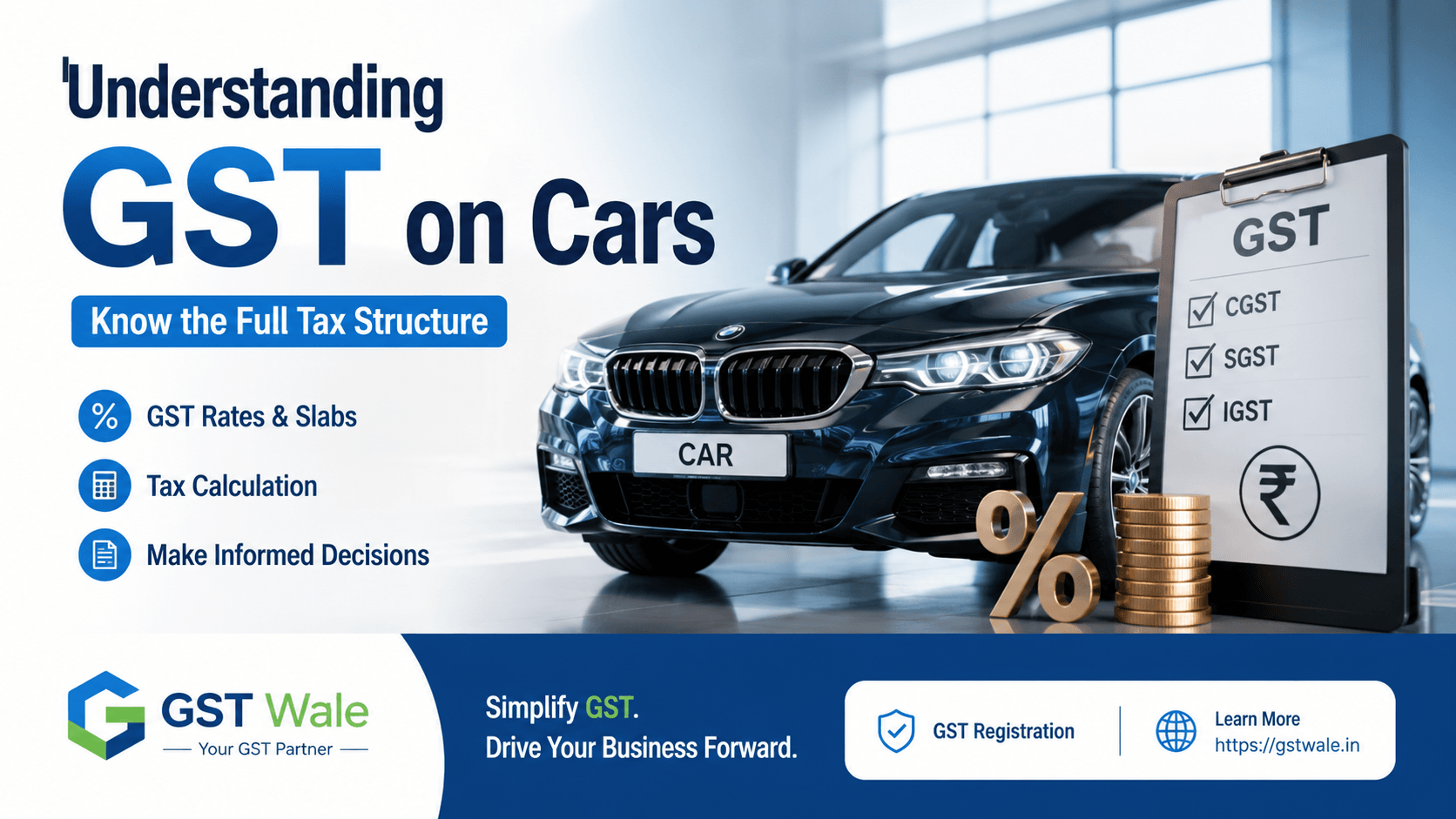
Planning to Buy a Vehicle? Decoding the Full GST for Car Structure
Planning to Buy a Vehicle? Decoding the Full GST for Car Structure
Buying a vehicle is a major milestone, whether it is for your growing family or to expand your business fleet. However, as an Indian taxpayer, one of the most confusing parts of the purchase process is understanding the final price tag after taxes. Navigating the gst for car landscape requires more than just checking the showroom price; you need to understand how the government levies taxes. If you are a business owner planning to claim input tax credits or structure your purchase correctly, ensuring your GST Registration is up to date is the first step toward tax compliance.
At GST Wale, we often see clients surprised by the sheer volume of taxes added to the base price of a vehicle. It is not just a flat percentage; the tax structure in India is layered based on vehicle size, engine capacity, and fuel type. Let’s break down the mechanics of the tax regime as it stands in 2026.
The Basic Structure: Understanding GST for Car Rates
When you walk into a dealership, the price you see is heavily influenced by the GST slab. Currently, most passenger vehicles in India attract a base GST rate of 28%. However, that is only the tip of the iceberg. To truly understand the gst for car cost, you have to account for the Compensation Cess, which is added on top of the 28% GST.
This cess is the primary reason why high-end vehicles feel significantly more expensive. Depending on the length of the car, its engine capacity (cc), and whether it is a sedan or an SUV, the cess can range anywhere from 1% to 22%.
Breaking Down Cess on Cars
The government uses the cess as a tool to discourage the purchase of larger, less fuel-efficient vehicles. Here is a simple way to look at how the gst for car is affected by the cess:
Small cars (petrol engines under 1200cc): These attract the lowest burden, making them the most affordable options in the market.
SUVs and larger vehicles: These attract the highest cess, often pushing the total tax burden close to 50% of the ex-factory price.
When you are planning your budget, do not just look at the ex-showroom price. Ask your dealer for the bifurcation of the taxes. As a thumb rule, the larger and more powerful the engine, the higher the gst for car will be due to the compounding effect of the cess.
Electric Vehicle GST: The Greener Path
If you are considering moving to an electric vehicle (EV) in 2026, the tax structure is significantly more favorable. To promote cleaner mobility, the government has kept the gst for car rate on EVs at a concessional 5%. Furthermore, electric vehicles are currently exempt from the Compensation Cess. This makes EVs an increasingly attractive option for both personal and commercial use when compared to traditional Internal Combustion Engine (ICE) vehicles.
Luxury Car Tax India: What to Expect
If your heart is set on a luxury vehicle, be prepared for the highest tier of taxation. The luxury car tax India structure effectively combines the maximum GST rate (28%) with the maximum permissible cess (22%). This means that for premium imported or high-capacity luxury vehicles, the tax component can nearly equal the base price of the car itself. When advising our high-net-worth clients at GST Wale, we always emphasize checking the total tax outflow before finalizing the booking.
GST on Commercial Vehicles
For our business clients, the gst for car or commercial vehicle purchases is a different ballgame. If you are buying a vehicle for business use, you must consider the input tax credit (ITC) implications. Generally, credit is not available for cars used for personal purposes. However, if the vehicle is used for business transportation or in the course of business, you might be eligible to claim ITC, provided your business is fully compliant. Understanding the gst on commercial vehicles is vital for managing your company’s cash flow effectively.
Frequently Asked Questions
1. What is the current GST rate for small petrol cars?
Small petrol cars with an engine capacity not exceeding 1200cc attract a 28% GST plus a 1% compensation cess.
2. Can I claim ITC on a car purchased in my personal name?
Generally, no. ITC is primarily available for business-related vehicle purchases, and even then, there are strict conditions under the GST Act.
3. Is the tax rate for SUVs higher than hatchbacks?
Yes, SUVs attract higher compensation cess compared to small hatchbacks, resulting in a higher overall gst for car burden.
4. Are electric vehicles taxed differently?
Yes, EVs enjoy a reduced GST rate of 5% and are currently exempt from any compensation cess to promote adoption.
5. Does the gst for car rate change every year?
While the base rates are stable, the government may adjust cess slabs in Union Budgets. It is always wise to consult with a tax professional like GST Wale before a major purchase.
Understanding the gst for car structure is not just about crunching numbers; it is about making an informed financial decision. Whether you are buying a fuel-efficient hatchback, an electric vehicle, or a commercial fleet, tax planning is essential. If you are confused about your tax liability or need assistance with tax compliance and registrations, GST Wale is here to help. Reach out to our expert team today to ensure your vehicle purchase is as tax-efficient as possible.
 Previous