


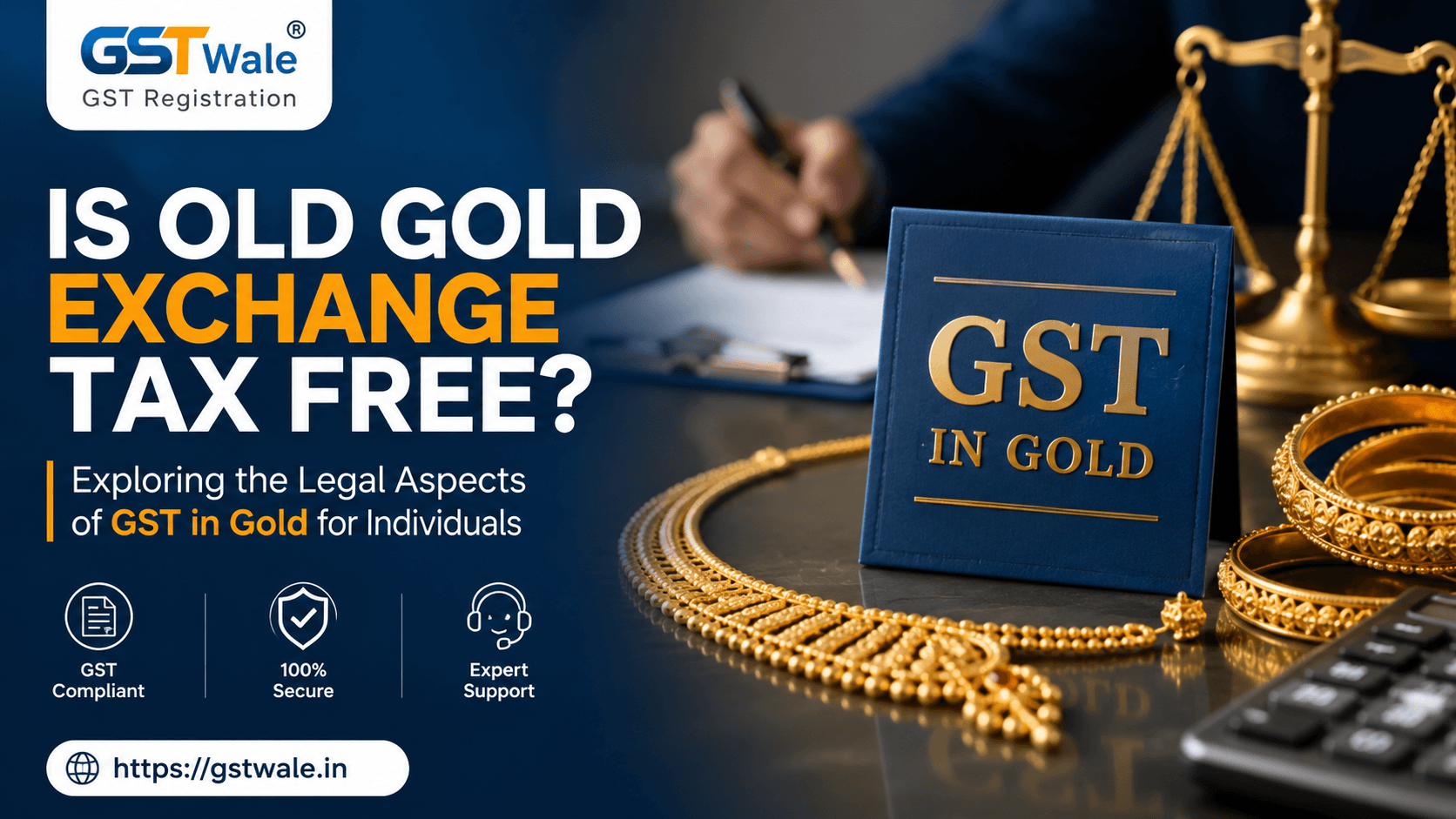
Is Old Gold Exchange Tax Free? Exploring the Legal Aspects of GST in Gold for Individuals
Is Old Gold Exchange Tax Free? Exploring the Legal Aspects of GST in Gold for Individuals
In the vibrant culture of India, gold is more than just an ornament; it is an emotion and a traditional investment. As your trusted partners at GST Wale, we frequently get asked about the tax implications when exchanging old jewelry for new designs. If you are a business owner or an individual navigating the complexities of tax compliance, you might be wondering if you need to worry about GST Registration when dealing with precious metals. A common confusion persists: Is the exchange of old gold a taxable event under the current gst in gold framework? Let’s break down the legal nuances in simple, everyday language.
Understanding the Basics: Does GST Apply to Old Gold Exchange?
When you walk into a jewelry store to swap your old gold for a new set, you are essentially entering into a barter transaction—goods for goods. Under the current tax regime, gst in gold is primarily levied on the value added during the manufacturing or trading process.
For an individual, the exchange of personal, used jewelry for new jewelry is generally not considered a 'supply' in the course or furtherance of business. Therefore, you do not pay GST on the value of the old gold you are surrendering. However, the jeweler will charge you GST on the value of the new gold jewelry you are purchasing.
How GST Rates Impact Your Gold Purchase
It is crucial to understand that gst in gold is currently set at a standard rate of 3% on the value of the gold. Additionally, there is a 5% GST on the making charges (labor costs) associated with the jewelry.
Gold Value: 3% GST
Making Charges: 5% GST
When you exchange old gold, the jeweler will deduct the value of your old gold from the total invoice value of the new gold. You are then liable to pay GST only on the net amount payable. This is where many people get confused, thinking the tax is being waived, but in reality, you are simply paying tax on the incremental value of your new purchase.
The Perspective of the Unorganized Sector Gold Sales
Historically, the unorganized sector gold sales thrived in India with minimal documentation. However, with the introduction of GST, the government has pushed for greater transparency. Jewelers are now required to maintain meticulous records.
If you are a jeweler or a trader, you must understand the margin scheme for jewellers. In specific instances where a dealer buys old gold from an unregistered person (like a common consumer) and sells it as is, the tax might be calculated differently. However, as an end consumer, you are usually outside the net of these complex compliance requirements unless your transaction involves significant commercial volume.
Is there a Reverse Charge Mechanism for Gold?
A frequent query we handle at GST Wale relates to the reverse charge mechanism gold provisions. It is important to clarify that, generally, the reverse charge mechanism (RCM) is not applicable to the common consumer exchanging jewelry. RCM under the GST law usually applies to specific categories of services or goods where the recipient of the supply pays the tax instead of the supplier. For the retail purchase and exchange of gold, the standard forward charge mechanism—where the jeweler collects and deposits the tax—remains the norm.
Practical Insights for Individuals
To ensure you are not overpaying or falling into compliance traps, keep these expert tips in mind:
Always demand a GST-compliant invoice: Regardless of whether you are exchanging old gold or buying fresh, ensure the tax breakup is clearly mentioned.
Understand the valuation: The jeweler will test the purity of your old gold (often using an XRF machine). Ensure the weight and purity deductions are transparent.
Don't ignore the making charges: Remember, gst in gold calculations are bifurcated. The 5% on making charges is a distinct component that often gets overlooked.
Frequently Asked Questions
Does the exchange of old gold attract GST?
No, the act of surrendering old gold is not a taxable supply for an individual. However, the new gold you receive is subject to 3% GST, and the associated making charges are subject to 5% GST.
How are making charges taxed under GST?
Making charges are treated as a service provided by the jeweler and attract a GST rate of 5%.
Can I save taxes by exchanging old gold?
You don't "save" taxes in the sense of an exemption. Instead, you reduce your net taxable amount because the value of your old gold is subtracted from the total purchase price of the new jewelry before the GST is applied.
What is the role of the unorganized sector in current tax laws?
The government is actively trying to bring the unorganized sector gold sales into the formal economy through mandatory hallmarking and strict GST compliance, ensuring that every transaction is traceable.
Does an individual need to pay GST when selling gold for cash?
Generally, if you are selling old gold to a jeweler for cash, you are not liable to pay GST. It is the jeweler who must maintain records of the purchase.
Let GST Wale Simplify Your Compliance
Navigating the nuances of gst in gold can be overwhelming, especially when you are trying to make the right financial decisions for your family or your business. While the laws are designed to be transparent, misinterpretation can lead to unnecessary financial losses.
At GST Wale, we believe that informed individuals make better financial choices. Whether you are dealing with complex bullion transactions or simply trying to understand the tax implications of your gold investments, our team of seasoned Chartered Accountants is here to provide the clarity you deserve.
 Previous