


Hallmarking vs Taxing: How BIS Regulations and GST for Gold Work Together for Consumer Safety
Hallmarking vs Taxing: How BIS Regulations and GST for Gold Work Together for Consumer Safety
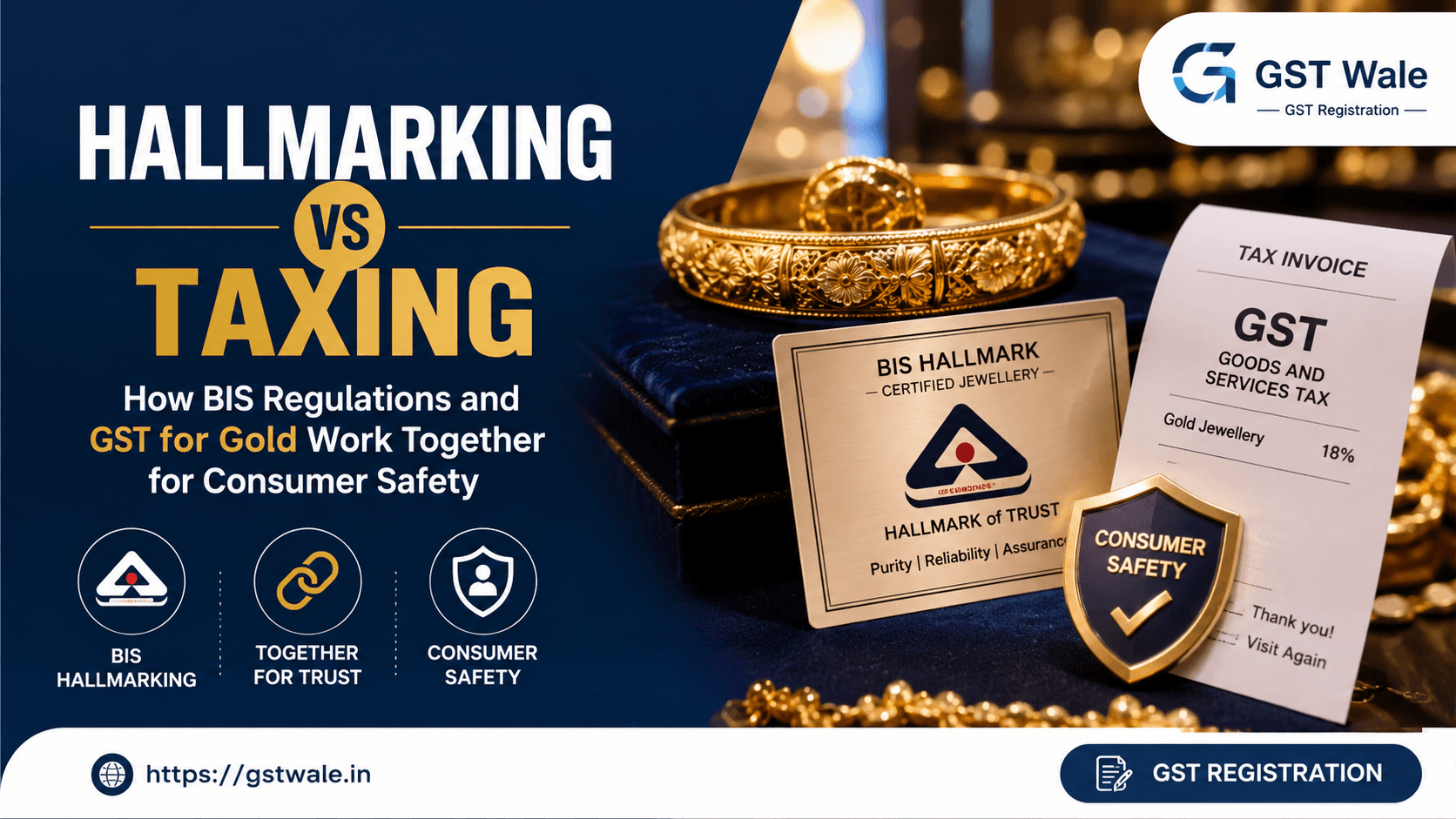
Gold is not just a metal in India; it is an emotion, a tradition, and for many, a primary asset class. However, buying gold has undergone a massive transformation in the last few years. As a Chartered Accountant, I often encounter clients who are confused by the twin pillars of gold regulation: BIS Hallmarking and the implementation of gst for gold.
At GST Wale, we believe that compliance isn't just about government mandates; it is about building trust in your business. Whether you are a jeweler looking to streamline your operations or a consumer wanting to ensure you get what you pay for, navigating tax laws is essential. For those looking to formalize their business structure, understanding the requirements for GST Registration is the first step toward long-term credibility in the precious metals market.
The Foundation: Why BIS Hallmarking Matters
Before we dive into the fiscal side, we must talk about the physical quality. Identifying pure gold ornaments used to be a gamble for the common man. You relied entirely on the jeweler’s word. Today, the Bureau of Indian Standards (BIS) has made it mandatory to have hallmarked jewelry.
The introduction of the 6 digit HUID tracking system has been a game-changer. Think of it as an Aadhar card for your jewelry. Every piece is laser-engraved with a unique code that allows you to trace the jeweler, the hallmarking center, and the purity of the metal online. This has significantly reduced the instances of under-karatage, ensuring that when you pay for 22-karat gold, you receive exactly that.
Deciphering GST for Gold: The Tax Structure
When the government introduced the new tax regime, the gst in gold became a subject of intense discussion. For the average buyer, it is important to understand that gold is not just subject to the base price of the metal; there is a tax component attached to it.
The current gst rates on gold are fixed at 3%. This is a relatively modest slab, but it applies to the total value of the transaction, which includes the gold price, making charges, and hallmarking charges.
Gold Value: The market rate of the metal on that day.
Making Charges: The labor component, which itself attracts a 3% GST.
Final Output: A transparent consumer protection tax invoice that clearly shows the value of the gold, the making charges, and the GST levied.
How Hallmarking and GST Work Together for Your Protection
You might wonder how these two seemingly different systems—one technical (BIS) and one fiscal (GST)—protect you. The answer lies in the "Paper Trail."
When a jeweler follows both, they are creating a verifiable history for every item. By providing a proper tax invoice that complies with gst for gold norms and selling only hallmarked jewelry with a HUID, the seller is putting their reputation on the line.
These gold authentication checks are not just for the government; they are for you. As an accountant, I always advise my clients: if a jeweler refuses to provide a computerized invoice or tries to sell you non-hallmarked gold to "save you tax," walk away. It is almost certainly a sign of a larger compliance issue that could leave you with substandard metal and no legal recourse.
Practical Insights for Buyers and Sellers
For the business owner, managing gst for gold is not just about filing returns; it is about maintaining a robust inventory system. You must reconcile your inward supply (gold bars/bullion) with your outward supply (jewelry).
For the buyer, remember these three simple tips:
Demand a GST invoice: Always check that the bill mentions the GSTIN of the jeweler and the breakdown of the tax paid.
Verify the HUID: Use the BIS Care App to verify the HUID code stamped on your ornament.
Check for Hallmark Signs: Look for the BIS logo, the purity grade (e.g., 22K916), and the 6-digit HUID code.
Frequently Asked Questions
Is GST applicable on old gold exchange?
When you exchange old gold for new jewelry, GST is applicable on the value of the new gold ornaments purchased. The old gold you provide is treated as a consideration, but the tax is levied on the total value of the new purchase.
Why is GST charged on making charges?
Making charges are considered a "service" provided by the jeweler. Since the service is provided in relation to the supply of gold, the 3% GST rate applies to the entire transaction value, including the labor component.
Can I claim input tax credit on gold purchases?
For a registered jeweler, the GST paid on the purchase of gold bullion is eligible for Input Tax Credit (ITC), which can be offset against the GST collected on the sale of finished jewelry.
What should I do if a jeweler refuses to give a GST invoice?
A jeweler is legally obligated to issue a tax invoice for gold transactions. Refusal is a major red flag. You should report such incidents to the GST authorities, as this practice is often a precursor to tax evasion.
Secure Your Business with GST Wale
Navigating the complexities of gst for gold can be daunting, whether you are a retail buyer or a business owner trying to stay compliant. At GST Wale, we specialize in helping businesses stay ahead of regulatory requirements, ensuring that your books are as clear as the gold you sell.
Don't let compliance hurdles slow down your business growth. Whether you need help with documentation, filing, or understanding the latest updates, we are here to guide you. Contact GST Wale today and let us help you build a transparent, trusted, and compliant gold business.
 Previous