


Everything You Need to Know About Schedule AL (Assets and Liabilities) in ITR 2
Everything You Need to Know About Schedule AL (Assets and Liabilities) in ITR 2
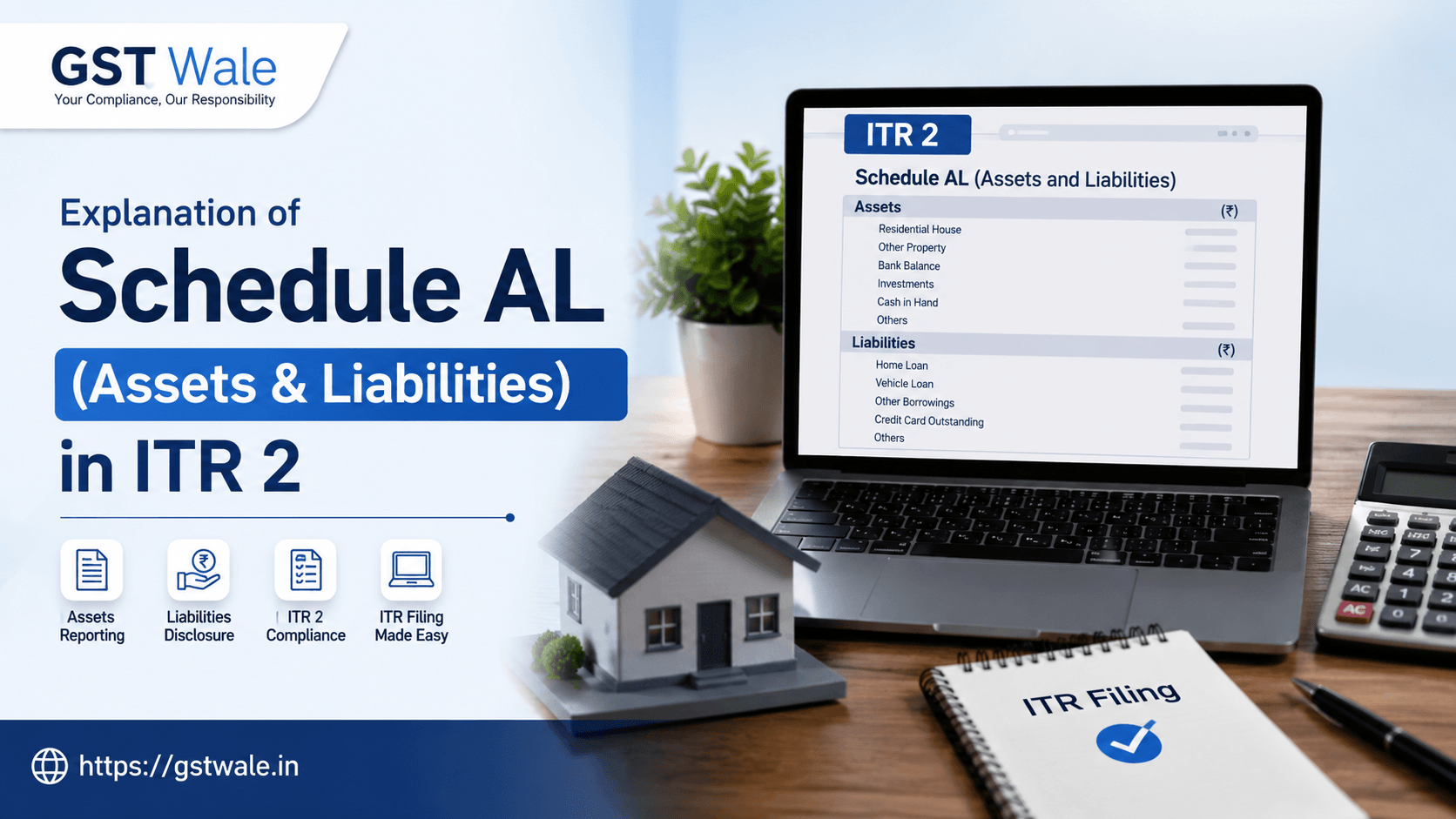
If you are preparing your itr 2, you may have noticed a section called Schedule AL (Assets and Liabilities). Many taxpayers become anxious when they see this schedule because they are unsure whether they need to fill it or what details are required. The good news is that understanding Schedule AL is much simpler when you know its purpose and reporting requirements. If you are looking for professional assistance with ITR Filing, GST Wale can help you complete your return accurately and on time.
Schedule AL in itr 2 is designed to collect information about your assets and liabilities as on the last day of the financial year. It is not a separate tax but a disclosure requirement under the income tax return form. Whether you are filing an itr form for the first time or have been completing it filing for years, understanding Schedule AL can help you avoid mistakes, notices, and unnecessary stress. Let us understand everything you need to know about this important section.
What Is Schedule AL in ITR 2?
Schedule AL stands for Assets and Liabilities. It is a disclosure section available in itr 2 where eligible taxpayers are required to declare the value of specified assets and liabilities as on 31st March of the relevant financial year.
The purpose of Schedule AL is to improve transparency and help the Income Tax Department compare an individual's financial position with their declared income. It does not automatically increase your tax liability. Instead, it provides an overview of your wealth based on your disclosed investments and borrowings.
Who Needs to Fill Schedule AL in ITR 2?
Not every taxpayer filing itr 2 is required to complete Schedule AL. The requirement depends on the prescribed conditions applicable for the relevant assessment year.
Generally, taxpayers who cross the specified income threshold and are required under the Income Tax Rules must disclose their assets and liabilities in Schedule AL. Before filing your return, always verify the latest eligibility criteria mentioned in the applicable income tax return form.
Common taxpayers filing ITR 2 include:
- Individuals with capital gains.
- Individuals having more than one house property.
- Taxpayers with foreign assets or foreign income.
- Individuals who are not eligible to file ITR-1.
What Assets Should Be Reported in Schedule AL?
When completing itr 2, you need to disclose the cost of specified assets owned by you as on the end of the financial year. The reporting is generally based on the cost of acquisition rather than the current market value.
Assets generally covered include:
- Residential houses and commercial buildings.
- Land and plots.
- Cash in hand exceeding the prescribed limits.
- Bank balances.
- Shares and securities.
- Mutual fund investments.
- Insurance policies with investment value.
- Loans and advances given.
- Jewellery, bullion, and precious ornaments.
- Motor vehicles, yachts, boats, and aircraft.
For example, if you purchased a residential flat for ₹60 lakh five years ago and today its market value is ₹1 crore, Schedule AL in itr 2 generally requires reporting the acquisition cost rather than the present market value.
What Liabilities Need to Be Reported?
Apart from assets, Schedule AL also asks taxpayers to disclose liabilities that are directly related to acquiring those assets.
Examples include:
- Outstanding home loan.
- Vehicle loan.
- Loan taken for purchasing investments.
- Borrowings used for acquiring property.
If a liability has no connection with acquiring an asset covered under Schedule AL, it may not require reporting in this section. Proper documentation helps in making accurate disclosures.
How Should Assets Be Valued in ITR 2?
One of the biggest misconceptions while filing itr 2 is that taxpayers need to disclose the current market value of every asset. In reality, Schedule AL generally requires reporting the cost of acquisition or investment made in those assets.
This means you should maintain records such as:
- Purchase deeds.
- Sale agreements.
- Investment statements.
- Bank records.
- Loan sanction letters.
- Vehicle purchase invoices.
Maintaining proper documentation makes future it filing much easier and helps if the department seeks clarification.
Common Mistakes While Filling Schedule AL in ITR 2
Even experienced taxpayers sometimes make avoidable errors while filing itr 2. Here are some of the most common mistakes.
1. Reporting Market Value Instead of Cost
Always check the reporting instructions. Inflated values may create unnecessary confusion.
2. Forgetting Jointly Owned Assets
If you jointly own a property, disclose your share appropriately as per ownership.
3. Ignoring Outstanding Loans
Relevant liabilities connected with disclosed assets should also be reported wherever applicable.
4. Missing Financial Investments
Many taxpayers disclose property but forget shares, mutual funds, or other investments.
5. Using Incomplete Records
Filing an itr form without reviewing investment documents can lead to inaccurate reporting.
Step-by-Step Process to Complete Schedule AL
If you are preparing your itr 2, follow these practical steps.
- Collect all property and investment documents.
- Download bank and investment statements.
- Identify loans linked with assets.
- Determine the acquisition cost of each asset.
- Verify ownership details.
- Cross-check disclosures before submitting the return.
- Retain supporting documents safely for future reference.
How ITR 2.0 Has Simplified Tax Filing
The newer filing environment, often referred to by many taxpayers as itr 2.0, has made return preparation more user-friendly. Improved validation checks, better guidance, and enhanced online utilities have reduced manual errors while completing the income tax return form.
However, even with these improvements, taxpayers should carefully review Schedule AL before submission because incorrect disclosures may invite questions from the Income Tax Department.
Why Accurate Disclosure Matters
Accurate reporting in itr 2 builds credibility and ensures consistency between your declared income and accumulated assets. It also reduces the chances of receiving notices seeking explanations regarding investments or wealth accumulation.
For example, if your declared income over several years reasonably supports the assets disclosed in Schedule AL, your return presents a consistent financial picture. Proper compliance today can save significant time and effort in the future.
Frequently Asked Questions
1. Is Schedule AL mandatory for everyone filing ITR 2?
No. Schedule AL is applicable only to taxpayers who meet the prescribed reporting conditions for the relevant assessment year. Always verify the latest filing requirements before submitting your return.
2. Should I mention the market value of my property?
Generally, Schedule AL requires disclosure based on the acquisition cost rather than the current market value. Review the instructions applicable to your assessment year before filing.
3. Are mutual funds and shares included in Schedule AL?
Yes. Eligible taxpayers generally need to disclose investments such as shares, securities, and mutual funds while completing the applicable Schedule AL requirements.
4. What if I own property jointly with my spouse?
You should disclose your ownership share appropriately along with the relevant acquisition cost and associated liability, wherever applicable.
5. Can incorrect reporting in ITR 2 result in a notice?
Yes. Incorrect, incomplete, or inconsistent disclosures may increase the possibility of receiving clarification requests from the Income Tax Department. Careful verification before submission is always advisable.
Understanding Schedule AL is an important part of filing itr 2 correctly. Although the disclosure requirements may initially appear complex, maintaining proper records and reporting the correct asset and liability details makes the process much easier. Whether you are preparing an itr form, planning to file it returns online, or completing your annual it filing, accurate disclosures help ensure compliance and reduce future complications.
At GST Wale, our experienced tax professionals help individuals and businesses file accurate returns with confidence. From reviewing Schedule AL to ensuring every detail in your itr 2 is correctly reported, we provide end-to-end support so you can file your return smoothly, avoid errors, and stay fully compliant with income tax regulations. Contact GST Wale today for reliable and hassle-free tax filing assistance.
 Previous