


A Complete Breakdown of Surcharge and Cess Calculations in Income Tax ITR Filing
A Complete Breakdown of Surcharge and Cess Calculations in Income Tax ITR Filing
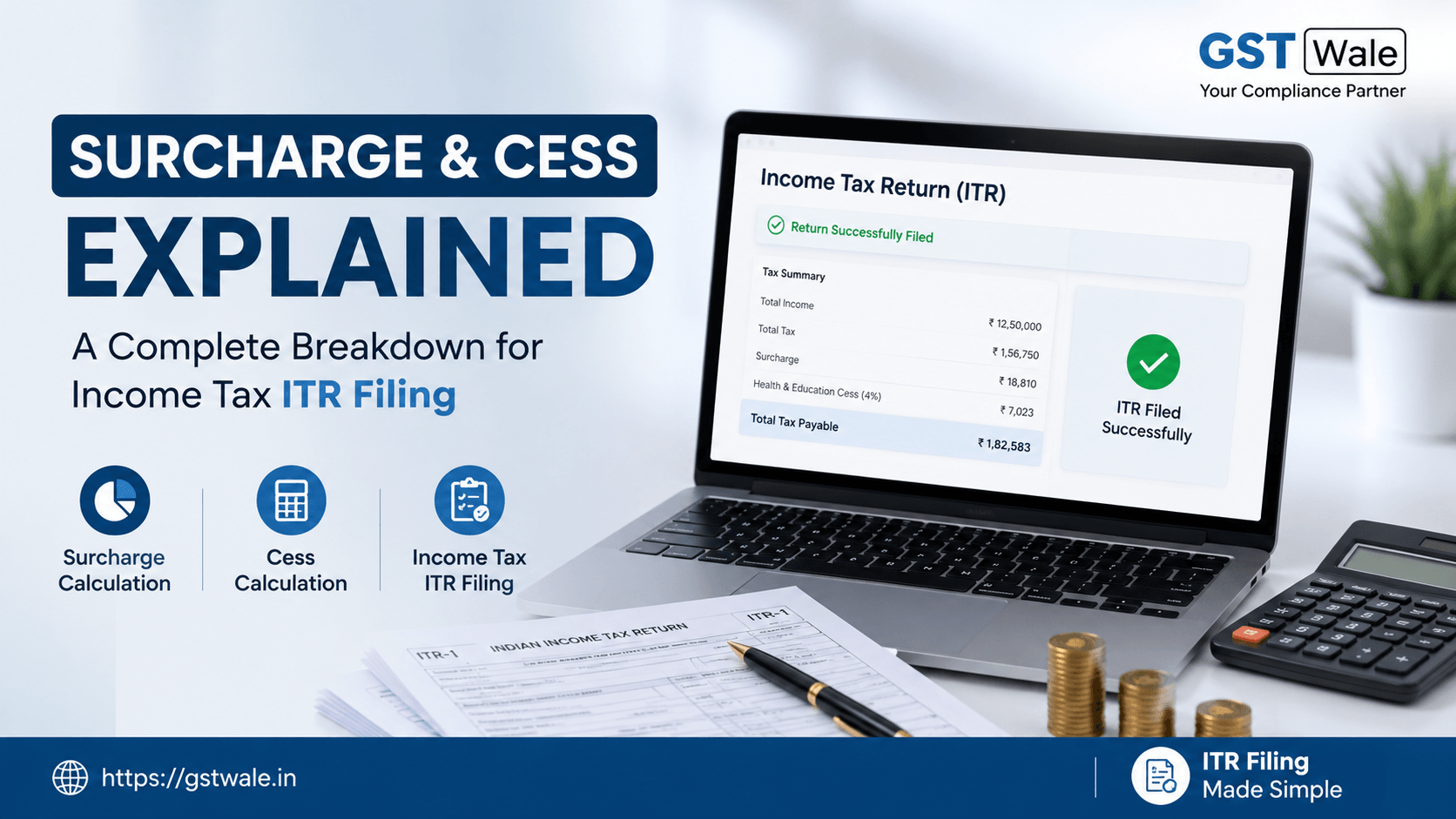
Tax season in India often brings a sense of unease, especially when dealing with the fine print of tax liability. Many taxpayers focus solely on their base tax slab, only to be surprised by the additional levies that appear in their tax computation. As you prepare for your ITR Filing, it is vital to understand that your final outflow is more than just a percentage of your income. At GST Wale, we believe that transparency is the first step toward financial compliance, and mastering the nuances of income tax itr filing ensures you never pay more than you owe—and never risk a notice from the authorities.
When we talk about the architecture of Indian taxation, we aren't just looking at the base rates. We are looking at a tiered system that includes surcharges for the wealthy and a mandatory health and education cess for every taxpayer.
Understanding the High Income Tax Surcharge
For many high-net-worth individuals and successful business owners, the standard tax slabs are only half the story. The high income tax surcharge acts as an additional levy on the income tax payable, functioning as a "tax on tax." It is designed as a tool of social equity, requiring those with higher annual earnings to contribute a larger portion to the national exchequer.
The surcharge is levied as a percentage of the income tax payable, not on the total income itself. This is a critical distinction that many taxpayers miss during their income tax itr filing. The rates vary significantly based on your total income level, and under the New Tax Regime, these brackets have been rationalized to provide some relief to the super-rich.
Current Surcharge Slabs at a Glance
Income > ₹50 Lakh up to ₹1 Crore: 10% of the income tax.
Income > ₹1 Crore up to ₹2 Crore: 15% of the income tax.
Income > ₹2 Crore up to ₹5 Crore: 25% of the income tax.
Income > ₹5 Crore: 37% of the income tax (Subject to recent budget amendments).
Note: Marginal relief is often applicable here, which prevents the tax burden from exceeding the marginal increase in income. If you are stuck in these brackets, our team at GST Wale helps you navigate these calculations to ensure you aren't paying extra due to a minor slip-up in your income tax itr filing.
Decoding Health and Education Cess Calculation
While the surcharge is reserved for higher earners, the health and education cess calculation applies to every single taxpayer, regardless of whether you are an individual, a firm, or a company. Currently, this is set at 4% of your total income tax plus any applicable surcharge.
Think of this as a dedicated fund. The government uses this revenue specifically to finance primary education and healthcare initiatives for rural and underprivileged populations.
Step-by-Step Cess Calculation
Calculate Base Tax: Determine your tax liability based on the applicable slab rates.
Add Surcharge: If your income exceeds the threshold, add the relevant surcharge percentage to your base tax.
Calculate Cess: Multiply the sum of (Base Tax + Surcharge) by 4%.
Final Liability: Add this 4% to your sub-total to arrive at the final tax payable.
The Logic Behind Progressive Income Tax Math
Understanding progressive income tax math is essential for effective financial planning. Our tax system is designed to be graduated, but the inclusion of cess and surcharge can make the effective tax rate look higher than the headline slab rates.
When you use an tax calculation engine details-based approach, you realize that the interplay between these three components—Base Tax, Surcharge, and Cess—is what actually hits your bank account. During your income tax itr filing, always ensure that your accounting software or tax portal is updated with the latest finance act changes, as these percentages can shift with each Union Budget.
Managing E-filing Surcharge Brackets
The introduction of the New Tax Regime has significantly altered e-filing surcharge brackets. Previously, the surcharge could climb as high as 37%. However, the government has moved to cap the surcharge at 25% for individuals opting for the New Tax Regime with income exceeding ₹2 crore.
When you sit down for your income tax itr filing, remember that the system automatically calculates these surcharges based on your reported income. However, errors in declaring income heads can lead the tax calculation engine details to miscompute your liability, potentially leading to a tax demand notice.
Frequently Asked Questions
Does the surcharge apply to both Old and New Tax Regimes?
Yes, the surcharge is applicable in both regimes. However, the rates and the thresholds at which they trigger can vary, particularly under the simplified New Tax Regime.
Is the cess calculated on total income or tax liability?
The health and education cess calculation is strictly based on your total income tax liability (including any applicable surcharge), not your gross total income.
What happens if I make a calculation error in my ITR?
If your income tax itr filing contains errors regarding surcharge or cess, the Centralized Processing Center (CPC) will typically issue a notice under Section 143(1), requesting a correction or payment of the differential amount.
Can I claim a deduction for the cess paid?
No, the health and education cess is not a deductible expense. It is an additional tax levy and must be paid in full on top of your income tax.
Navigating the complexities of income tax itr filing shouldn't be a headache. Whether it’s applying the correct surcharge bracket or ensuring your health and education cess calculation is spot on, precision is key. At GST Wale, we take the stress out of your compliance journey. Don't let tax math distract you from growing your business—let our experts handle your filings with the diligence you deserve.
 Previous