


Ultimate Guide to Non-Resident Taxable Person (NRTP) Goods and Services Tax Registration
Ultimate Guide to Non-Resident Taxable Person (NRTP) Goods and Services Tax Registration
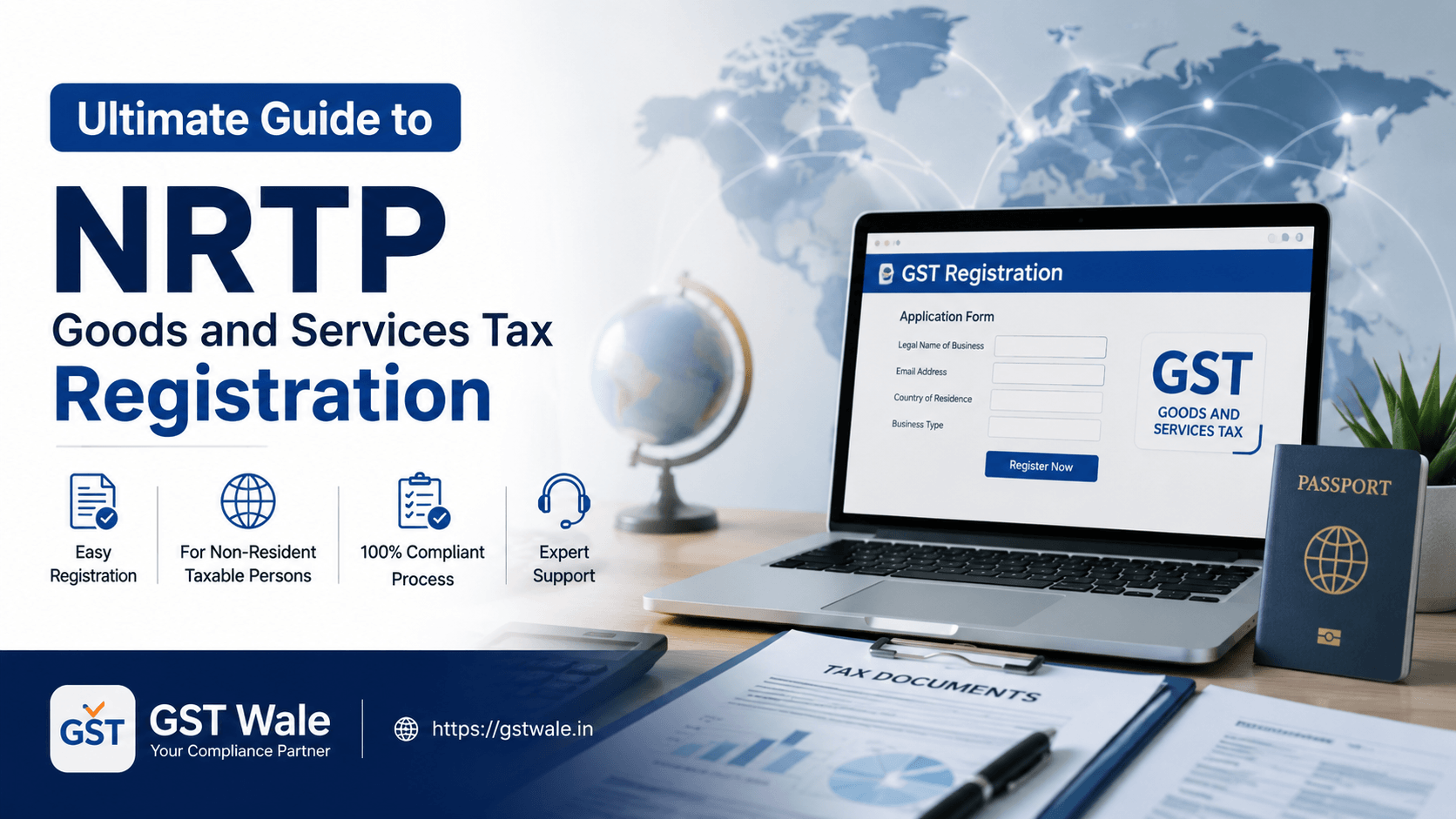
Navigating the complexities of Indian tax laws can feel like a maze, especially if you are based outside the country but want to tap into the vibrant Indian market. At GST Wale, we often receive queries from foreign business owners who are unsure about their tax obligations here. If you are planning to supply goods or services into India on an occasional basis, you need to understand the nuances of goods and services tax registration. Before diving into the technicalities, it is helpful to have a clear understanding of the broader requirements, which you can explore in more detail through our GST Registration service page to ensure you start your journey on the right foot.
Who is a Non-Resident Taxable Person (NRTP)?
In simple terms, a Non-Resident Taxable Person (NRTP) is any individual or business entity that occasionally undertakes transactions involving the supply of goods, services, or both, but does not have a fixed place of business or residence within India.
Think of a foreign exhibitor coming to India for a trade fair or a global consultant visiting to provide a short-term project service. Even if you don't have a physical office in Mumbai or Delhi, if you are making taxable supplies, the law treats you as an NRTP. Unlike regular taxpayers, there is no threshold limit for you; you are required to register regardless of your turnover.
Why You Need Goods and Services Tax Registration
For an NRTP, obtaining a goods and services tax registration is not optional—it is a mandatory legal requirement. Because you lack a physical presence in the country, the government requires this registration to ensure tax compliance.
Without this, you cannot legally carry out taxable supplies in India. Moreover, your buyers will find it difficult to claim input tax credits on their purchases from you, which could hinder your business relationships. Getting your goods and services tax registration in order acts as your "license to operate" in the Indian market.
The Process: Step-by-Step
Registering as an NRTP follows a specific workflow designed to verify your identity and ensure upfront tax compliance.
Generate a TRN: You must visit the GST portal and fill out Part A of the registration form. You will need a valid passport number and, if available, your home country’s tax identification number.
Appoint an Authorized Signatory: This is a crucial step. You must appoint an individual who is a resident of India to act as your authorized signatory. This person must have a valid PAN and an Indian mobile number, as they will handle the authentication (OTP) and communication with the authorities.
Advance Tax Payment: This is a unique requirement for NRTPs. You are required to make an advance tax payment India based on your estimated tax liability for the period you plan to operate. Once this payment is credited to your electronic cash ledger, your registration application is processed.
Submission: After verifying the details and submitting the required documents—including your authorized signatory passport copy if applicable or your own identity documents—you move to Part B to provide business specifics.
Understanding NRTP Registration Validity
One of the most common questions we get at GST Wale is about how long the registration lasts. Unlike a permanent business, your nrtp registration validity is temporary.
Standard Period: It is valid for the period specified in your application or 90 days from the effective date of registration, whichever is earlier.
Extensions: If your project or business engagement in India takes longer than expected, you can apply for a one-time extension of another 90 days.
Managing this timeline is vital to ensure your goods and services tax registration does not expire while you are still conducting business.
Documents You Need to Keep Ready
To ensure a smooth foreign business tax setup, keep these documents handy:
Scanned copy of the applicant’s passport.
Proof of business existence in the home country.
PAN of the Indian authorized signatory.
Proof of the place of business in India (e.g., stall allotment letter for an exhibition).
Bank account details for refund purposes.
Frequently Asked Questions
1. Is it mandatory to have an Indian authorized signatory?
Yes. Since the GST portal relies on Indian mobile numbers for OTP authentication, you must appoint an authorized representative in India.
2. Can I claim Input Tax Credit (ITC) as an NRTP?
Generally, no. An NRTP cannot claim ITC on local procurement. However, an exception is made for IGST paid on the import of goods.
3. What happens if I do not pay the advance tax?
The registration process will not be completed. Your goods and services tax registration is only granted after the advance tax payment has been deposited into your electronic cash ledger.
4. Do I need to file monthly returns?
Yes, you are required to file GSTR-5, which is a monthly return summarizing your supplies and tax payments.
Entering the Indian market offers immense potential, but the regulatory landscape requires careful navigation. From ensuring your goods and services tax registration is filed at least five days before you start operations to managing your nrtp registration validity, there are many moving parts to track.
At GST Wale, we specialize in simplifying these complexities for foreign businesses. Whether you are setting up for an exhibition or a temporary service contract, our team is here to handle your goods and services tax registration so you can focus on growing your business. Reach out to us today to get started!
 Previous