


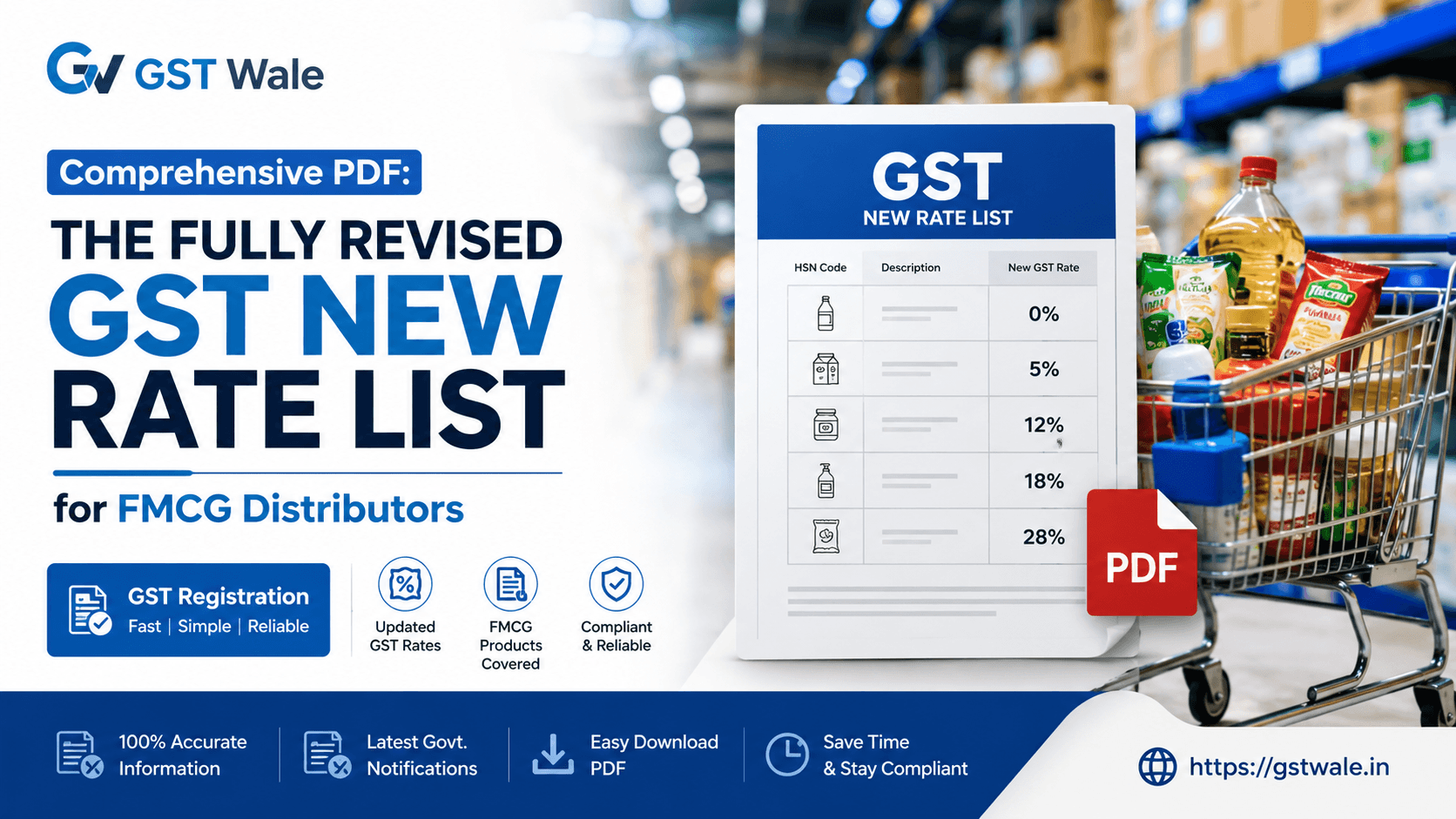
Comprehensive PDF: The Fully Revised GST New Rate List for FMCG Distributors
Comprehensive PDF: The Fully Revised GST New Rate List for FMCG Distributors
Namaste! I’m from the "GST Wale" team, and I know exactly what’s keeping you up at night—the recent overhaul in our tax structure. If you are an FMCG distributor, you’ve likely felt the ground shift under your feet since the major reforms that took effect on September 22, 2025. Keeping up with the gst new rate list isn’t just about avoiding penalties; it’s about protecting your margins in a highly competitive market. Whether you are dealing with daily essentials or premium processed goods, staying compliant is the backbone of your business, and that begins with proper GST Registration to ensure you are operating within the current legal framework.
Understanding the GST New Rate List Structure
The landscape of taxation for the FMCG sector has seen a massive shift toward simplification. Gone are the days of juggling complex slabs that confused even the best accountants. The current regime now primarily revolves around three core pillars: 0% (exempt), 5% (merit rate), and 18% (standard rate), with a specific 40% "sin and luxury" category for aerated drinks and premium items.
For many of you, this gst new rate list has been a game-changer. Most products that were previously trapped in the 12% or 18% brackets have been rationalized. For example, the soap and shampoo tax drop—which moved these essential items from 18% down to 5%—has fundamentally changed how you calculate your landing costs and retail pricing.
Key Changes Affecting FMCG Sector Margins
As a CA, I often tell my clients that tax is not just a compliance cost; it is a business strategy. When the gst new rate changes, your fmcg sector margins are directly impacted.
The Big Shift: From 12% and 18% to 5%
The most significant impact has been on daily-use items. If you are in the business of distributing processed foods, here is what you need to track:
Packaged Foods: Namkeens, bhujia, instant noodles, and biscuits have largely moved to the 5% slab.
Dairy & Spreads: Ghee, butter, and cheese, previously at 12%, are now under the 5% umbrella.
Personal Care: As mentioned, items like toothpaste, hair oil, and detergents have seen a major reduction to 5%.
Why Wholesale Tax Invoicing Accuracy Matters
With these changes, wholesale tax invoicing has become more critical than ever. If your billing software is still hardcoded with the old 12% or 18% rates for items that now fall under the 5% slab, you are either overcharging your customers—leading to potential loss of market share—or underpaying the government, which invites unwanted scrutiny and penalties.
Practical Tips for Distributors
Reconcile Your HSN Codes: The gst new slab structure is heavily dependent on accurate HSN classification. If a product is misclassified, you could be paying 18% on an item that should be at 5%.
Update Your Software: Don’t rely on manual calculations. Ensure your accounting or POS software is updated with the latest master data.
Review Input Tax Credit (ITC): When tax rates on your sales decrease, ensure your procurement strategy aligns so that you aren't accumulating "inverted duty" credit that gets stuck in the system.
Frequently Asked Questions (FAQs)
1. Is the 12% GST slab completely removed?
For the vast majority of FMCG products, yes. Almost all items that were previously taxed at 12% have been moved down to the 5% slab to simplify the tax structure.
2. What items fall under the new 40% category?
This special slab is reserved for "sin and luxury" goods. This includes aerated drinks, energy drinks, tobacco products, and certain high-end premium automobiles.
3. How do I know if my FMCG business is compliant with the gst new rate list?
The best way is to perform a monthly audit of your sales registers against the latest government notifications. If you find discrepancies, it’s vital to adjust your GSTR filings immediately.
4. Does the change in GST rates impact my MRP?
The MRP is a retail decision, but the gst rates impact your net realization. While the government intends for the benefit of lower taxes to reach the consumer, distributors often use the savings to manage logistics and operational costs.
Navigating the nuances of the gst new rate list can be overwhelming, but you don’t have to do it alone. At "GST Wale," we specialize in helping distributors streamline their compliance, optimize their tax liability, and focus on what they do best—growing their business.
 Previous