


Complete Breakdown: What is the Real Difference Between GST Exempt, Nil-Rated, and Non-GST?
Complete Breakdown: What is the Real Difference Between GST Exempt, Nil-Rated, and Non-GST?
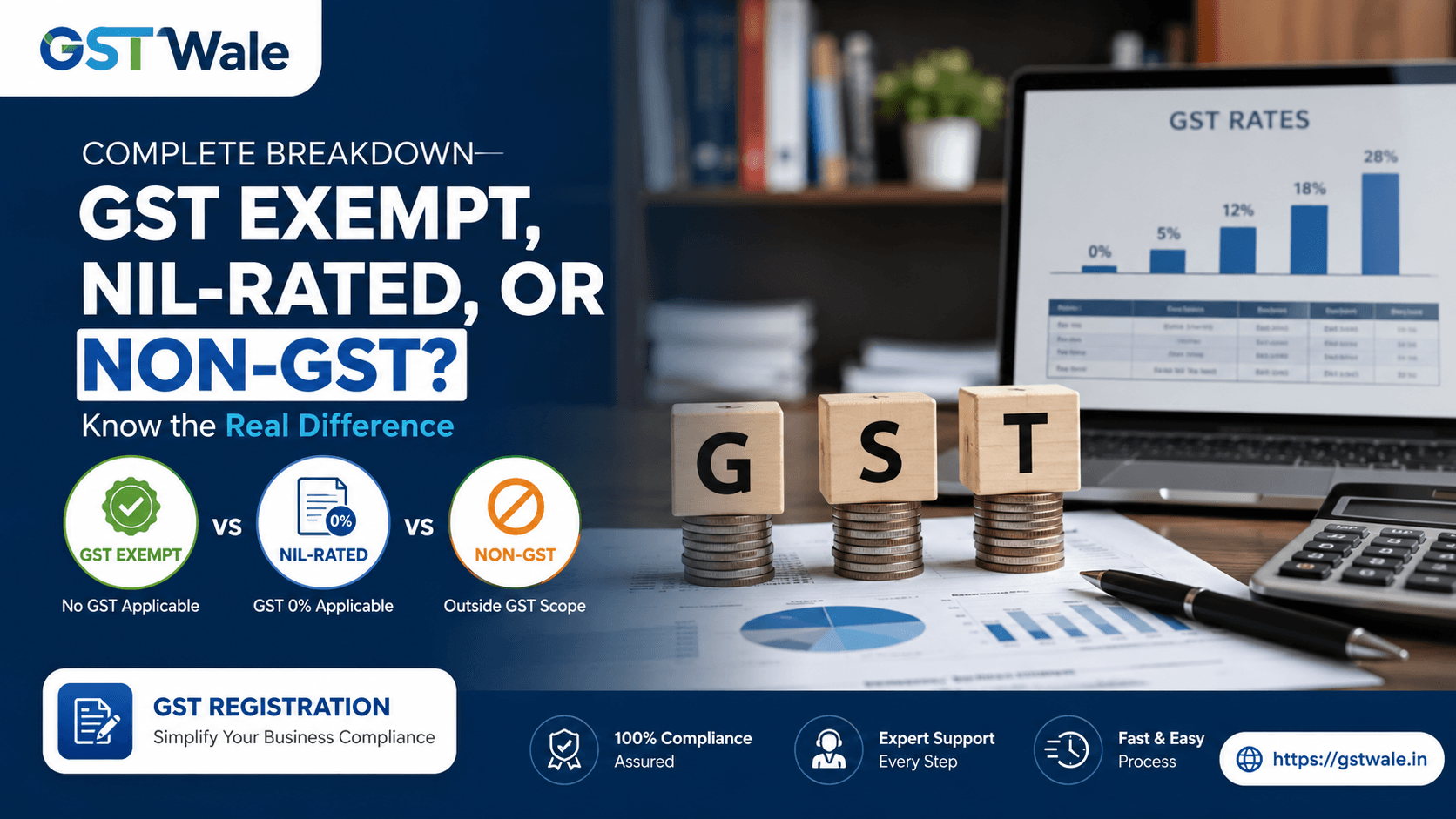
Navigating the complexities of Indian taxation can feel like solving a never-ending puzzle, especially when you are trying to understand the nuances of various tax categories. If you are a budding entrepreneur or an established business owner, getting your GST Registration done is just the first step. The real challenge often lies in correctly classifying your sales to ensure compliance with the current gst rates. Many business owners mistakenly interchange terms like "Exempt," "Nil-Rated," and "Non-GST," which can lead to costly errors during audits. At GST Wale, we believe that clarity is the foundation of a healthy business, so let’s break down these categories to help you better understand how gst rates apply—or don't apply—to your business transactions.
Understanding the Basics: Why Classification Matters
When you issue an invoice, the tax treatment of the product or service defines whether you collect tax or simply issue a bill of supply. Understanding the distinction is vital, especially when you are tracking your aggregate turnover calculations, as certain supplies are excluded while others are included in your overall reporting.
If you are dealing with a mix of taxable and tax-free goods, staying updated with the gst new rate list is crucial. However, the confusion usually stems from the technical definitions provided under the GST Act. Let’s demystify these one by one.
What is a Nil-Rated Supply?
A nil-rated supply is one that is technically within the ambit of the GST law, but the gst rates applicable to these goods or services are 0%.
Example: Salt, grains, or fresh vegetables often fall under this category.
The Nuance: Even though the rate is 0%, these items are still considered "taxable supplies" under the law.
Why does this matter? Because in a nil-rated supply, you are not required to charge GST, but you are also not eligible to claim Input Tax Credit (ITC) on the purchases related to these specific supplies. It is a subtle but important distinction that often catches business owners off guard during their annual filing.
What are Exempt Supplies?
Exempt supplies are those that are explicitly notified by the government as being outside the scope of tax. Unlike nil-rated items, these are often goods or services that the government has chosen to keep away from the gst new slab structure entirely to keep the cost of living affordable.
Common Examples: Health services, educational services, or unbranded supply of milk.
The Difference: While nil-rated supplies have a tax rate of 0%, exempt supplies have no tax rate at all because they are "exempted" via a specific notification.
Practical Insight: Just like nil-rated supplies, you cannot claim Input Tax Credit on goods or services used exclusively to provide exempt supplies. You must be careful to keep your books organized, as reverse charge on exemptions can occasionally complicate your input tax calculations if not handled by a professional.
Defining Non-GST Supplies
This is where many people get tripped up. Non-GST supplies refer to items that are entirely outside the constitutional mandate of the GST law. These goods were never meant to be a part of the gst new rate list.
The Primary Examples: The most common examples are alcohol petrol outside gst, along with high-speed diesel and aviation turbine fuel for human consumption.
Why it’s Different: Because these items fall outside the GST law, they are governed by state-level VAT and excise duties. When you deal in these products, you are navigating a completely different tax regime, and they do not count toward your GST-related compliance obligations in the same way.
Why Keeping Track of GST Rates is Crucial for Your Business
Whether it is a gst new rate change or a shift in a gst new slab, your business efficiency depends on your ability to classify invoices correctly.
Key Takeaways for Compliance:
Avoid Penalties: Incorrectly labeling a taxable item as exempt is a common trigger for scrutiny.
ITC Management: Always remember that if you provide exempt or nil-rated supplies, your ability to claim ITC is restricted.
Audit Readiness: Proper documentation ensures that your aggregate turnover calculations remain accurate, preventing issues during GST audits.
Frequently Asked Questions
1. Can I claim Input Tax Credit on nil-rated supplies?
No, you cannot claim ITC on inputs specifically used for nil-rated or exempt supplies, as they do not attract output tax.
2. Are alcohol and petrol subject to the same GST rules as other goods?
No, they are non-GST supplies. They are kept outside the purview of the current gst rates structure and are taxed under legacy state laws.
3. How do I know if my service is exempt?
The government issues notifications periodically. If your service (like certain educational or agricultural activities) is listed in these notifications, it is exempt. You should always check the latest gst new rate list before finalizing your invoice format.
4. What is the main difference between Nil-Rated and Exempt?
Nil-rated supplies have a rate of 0% under the GST law, while exempt supplies are specifically excluded from the tax net via government notification. Both do not attract GST, but their legal classification differs.
Understanding the difference between these categories isn't just about accounting; it’s about optimizing your cash flow and ensuring your business stays compliant. Keeping up with every gst new slab and gst rates change can be overwhelming for a business owner focused on growth.
At GST Wale, we specialize in simplifying these complexities for you. Whether you need help with your initial documentation or require ongoing advisory to manage your tax classification effectively, our team is here to guide you. Don’t let confusion over gst rates hold your business back. Reach out to us today and let us handle the numbers while you focus on scaling your vision!
 Previous